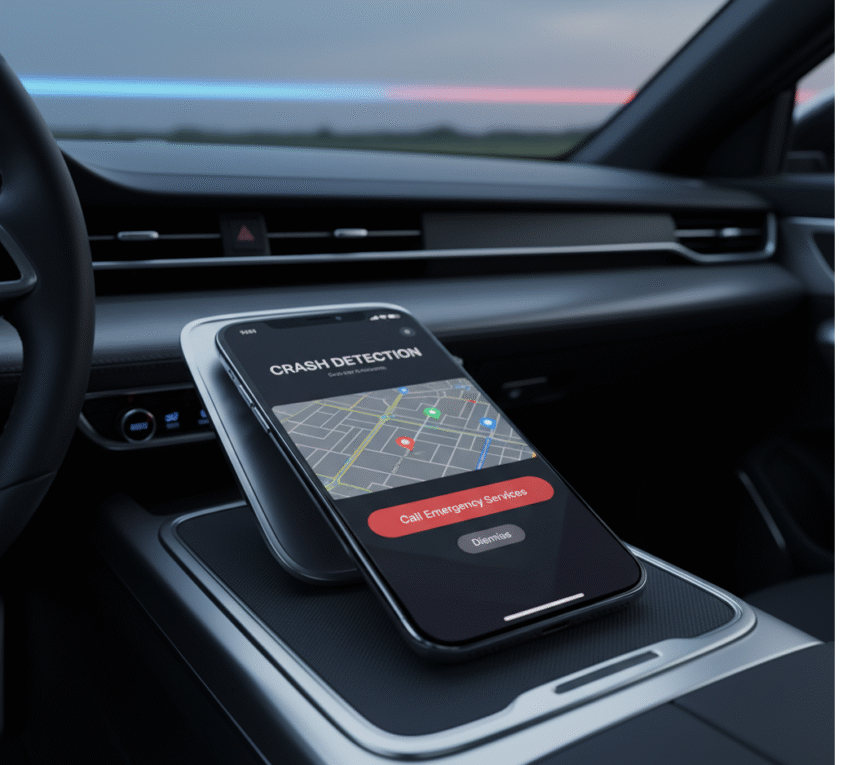
In recent years, iPhone crash detection technology has drawn significant public attention for its promise to recognize severe vehicle accidents and automatically contact emergency services. While the idea sounds revolutionary, many misconceptions surround how it operates and what it can or cannot do. Misunderstandings about reliability, accuracy, and limitations often create confusion for drivers, passengers, and even legal professionals assessing accident-related evidence. This article clarifies the myths while explaining the real-world application of this safety feature.
Why iPhone Crash Detection Technology Became a Point of Debate
The release of iPhone crash detection technology was seen as an advancement in smartphone safety. Apple designed the feature to use advanced sensors, including accelerometers, gyroscopes, GPS, and microphones, to recognize the dynamics of a car crash. Once triggered, the phone attempts to confirm if the user is responsive. If not, it dials emergency services and shares the device’s location.
This safety net appeals to many drivers, but its rollout led to misunderstandings. False alarms in amusement parks, accidental triggers during skiing, and debates about whether such technology is always dependable have led to skepticism. These cases highlight why understanding the reality behind the function is essential.
Misconception 1: iPhone Crash Detection Technology Always Works Perfectly
One of the most common misconceptions is that iPhone crash detection technology never fails. Some assume the phone can differentiate flawlessly between accidents and harmless activities. However, the technology relies on algorithms interpreting rapid deceleration, sound data, and movement patterns. Activities such as skiing, roller coasters, or extreme sports can mimic crash-like conditions.
The National Highway Traffic Safety Administration (NHTSA) emphasizes that no detection system is flawless in preventing or responding to accidents. Just as airbags and seatbelts have limitations, so does digital crash recognition. Believing that the system guarantees accurate reporting could create misplaced confidence.
Misconception 2: iPhone Crash Detection Technology Replaces the Need for Emergency Response
Another misconception is that this feature eliminates the need for human emergency calls. In reality, iPhone crash detection technology is a supportive tool, not a replacement for traditional reporting methods. If a user is conscious and able, calling emergency services remains the best approach.
False reliance on the feature could cause delays if a crash occurs in an area with limited cell service or if the sensors fail to meet the algorithm’s threshold. As government emergency response data shows, response time is crucial in saving lives, meaning technology cannot replace direct human action.
Misconception 3: iPhone Crash Detection Technology Is Only for Drivers
Many people assume the feature is limited to drivers alone. In truth, iPhone crash detection technology applies to anyone traveling in a motor vehicle, including passengers. If a passenger’s phone registers the crash, it can still initiate an emergency response.
This broader application is vital for situations where the driver may be incapacitated. Passengers can benefit equally, ensuring more than one device might respond to the same event.
Misconception 4: iPhone Crash Detection Technology Is Recognized as Infallible Evidence
There is a misconception that crash detection reports generated by an iPhone carry the same legal weight as traditional accident reports. While useful, iPhone crash detection technology is not considered definitive evidence in court. Accident reconstruction experts, witness statements, police reports, and medical assessments still form the backbone of legal proceedings.
Legal discussions around digital crash evidence highlight both its usefulness and its limits. Data from smartphones may supplement, but not replace, traditional forms of documentation. Courts often view such evidence as supportive rather than conclusive. For more detailed legal context, you can review government-issued guidance on traffic accident reporting through the NHTSA.
Misconception 5: iPhone Crash Detection Technology Works Everywhere, Anytime
Another widespread belief is that this technology works in all conditions. In practice, iPhone crash detection technology depends on connectivity, battery life, and environmental conditions. Without cellular coverage, the automatic emergency call cannot connect, even if the sensors recognize an accident.
This limitation is especially concerning in rural or mountainous areas, where crashes may occur far from reliable coverage. While the device might register the event, the emergency call might fail to transmit, leaving victims dependent on traditional means of seeking help.
Misconception 6: False Alarms Make iPhone Crash Detection Technology Useless
Reports of false alarms have fueled the perception that the system is unreliable. Ski resorts and amusement parks, in particular, have recorded numerous accidental emergency calls triggered by rapid movements. However, dismissing the feature as useless overlooks its proven ability to recognize real emergencies.
For example, when severe accidents occur on highways, iPhone crash detection technology has successfully connected victims to emergency responders when they were unable to do so themselves. The presence of occasional false alarms reflects the challenge of creating highly sensitive detection systems. Like smoke detectors, occasional false triggers do not negate their life-saving potential.
The Balance Between Innovation and Reality
Understanding the truth behind iPhone crash detection technology requires recognizing its balance between innovation and limitation. The feature is designed as a safeguard, not an absolute guarantee. It can offer life-saving support in critical situations, but it should not replace standard safety measures or emergency protocols.
By correcting common misconceptions, drivers and passengers can appreciate the role this feature plays without inflating expectations. It represents progress in digital safety but must be seen as part of a larger framework of accident prevention and response.
Real-World Implications in Accident Investigations
The legal field has taken interest in how iPhone crash detection technology influences accident reporting and liability discussions. Evidence collected from smartphones has already become part of accident cases, supporting claims about timing, location, and impact force.
However, such data often requires interpretation alongside official accident forms like North Carolina’s DMV-349 or equivalent documentation in other states. For deeper insight into how technology intersects with accident claims, the role of iPhone detection tech used in car accidents provides additional perspective.
Conclusion: A Tool, Not a Guarantee
The myths surrounding iPhone crash detection technology often arise from overestimating its power or underestimating its flaws. While it offers meaningful support during serious accidents, it should not be mistaken for a flawless system. Users must understand its limitations, especially regarding connectivity, accuracy, and legal admissibility.
As technology continues to evolve, the role of smartphone-based crash detection will expand, but education and awareness remain vital. Recognizing the truth behind common misconceptions allows society to use these tools responsibly, valuing them as supplements to, not replacements for, traditional safety practices.
Leave a Reply