
Driving is an activity that demands full concentration, quick decision-making, and heightened awareness of the environment. Within this context, loud music affecting driving has become a widely debated issue as researchers and traffic safety authorities examine how auditory distractions shape driver behavior. While music can often enhance a driver’s mood or reduce stress, when played at elevated volumes, it can impair reaction times, obstruct situational awareness, and lead to dangerous consequences on the road.
The connection between sound levels and driver safety is not new, but the rise of personalized playlists, upgraded sound systems, and noise-isolating vehicles has amplified the risks. Studies now show that loud music affecting driving is more than just a matter of taste or comfort—it is a measurable factor that influences accident probability and the ability to respond quickly to sudden hazards.
The Science Behind Loud Music Affecting Driving
Research on auditory distractions highlights how loud music affecting driving reduces brain capacity available for critical tasks. Driving requires a combination of visual attention, motor coordination, and auditory processing. When music reaches high decibel levels, the brain shifts focus from external sounds such as honking horns, emergency sirens, or tire friction. This creates delays in response times that can escalate in real-world driving scenarios.
A frequently cited study from the National Highway Traffic Safety Administration (NHTSA) notes that distractions reducing reaction time by even half a second can significantly increase collision risks. In cases where drivers are already dealing with complex environments—heavy traffic, poor weather, or nighttime driving—the effects of loud music affecting driving become even more severe.
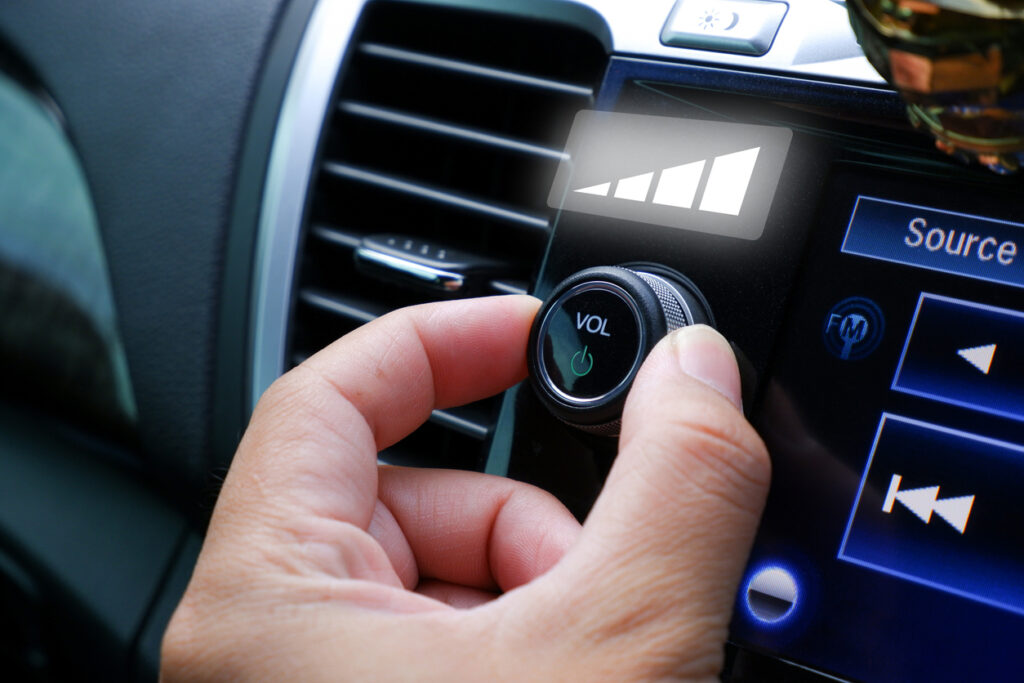
How Loud Music Affects Reaction Times in Drivers
Reaction time is the interval between recognizing a stimulus and initiating a physical response. For drivers, this typically means noticing a traffic light change, a pedestrian stepping onto the road, or the car ahead braking suddenly. Loud music affecting driving disrupts this process in multiple ways.
First, the high volume masks auditory signals crucial for safe driving, such as emergency sirens or warning horns. Second, intense beats or fast tempos can psychologically push drivers toward riskier behaviors, like accelerating beyond speed limits. Finally, cognitive load from processing complex rhythms interferes with decision-making, leaving the driver less able to anticipate hazards.
The difference can be startling: in controlled tests, drivers exposed to loud music affecting driving required significantly more time to apply brakes compared to those listening to softer music or no music at all. Over distances traveled at highway speeds, even fractions of a second can mean dozens of feet gained before braking begins.
The Role of Age in Loud Music Affecting Driving
While all drivers can experience delayed reactions from auditory distractions, younger drivers tend to be disproportionately affected. Their heightened preference for energetic, bass-heavy music often combines with limited driving experience. Studies on loud music affecting driving among young drivers reveal higher incidences of lane drifting, abrupt braking, and near-miss situations compared to older groups.
This is not simply a generational preference issue but a neurological one. Younger individuals may overestimate their ability to multitask, believing they can balance music immersion with driving demands. Yet evidence consistently shows that loud music affecting driving lowers performance across reaction time tests regardless of confidence levels.

Legal Considerations of Loud Music Affecting Driving
Traffic regulations increasingly recognize loud music affecting driving as a safety hazard. While laws vary by state, many jurisdictions categorize excessive in-car sound as a form of distracted driving. Police officers may cite drivers not only for noise violations but also for reckless or inattentive driving if accidents occur under such conditions.
Court cases highlight how liability can shift depending on whether loud music affecting driving was a contributing factor. For instance, in accident reconstructions, investigators may examine whether auditory distractions delayed a driver’s response. The implications are serious: proving that a driver’s delayed reaction stemmed from excessive music volume can affect insurance claims, fault allocation, and even criminal charges in severe accidents.
For further insight into how courts and safety organizations analyze auditory distraction, the Centers for Disease Control and Prevention provides resources on distracted driving at cdc.gov.
Case Studies Demonstrating Loud Music Affecting Driving
Historical and experimental evidence paints a clearer picture of the dangers tied to loud music affecting driving. In controlled driving simulators, participants subjected to high-volume environments exhibited slower braking responses and more frequent traffic violations. On public roads, crash reports often include references to loud stereo systems interfering with hazard detection.
One widely referenced academic study noted that drivers listening to fast-paced, high-volume tracks made nearly twice as many traffic errors compared to those listening to moderate-volume classical music. Another case documented a collision where investigators determined the driver failed to hear an approaching ambulance due to excessively loud music, leading to delayed braking and a chain-reaction crash.
For broader perspective, a detailed legal discussion of the risks can be found in this resource on loud music affecting driving, which underscores the role of sound intensity in accident prevention.
Reaction Times and the Psychology of Loud Music Affecting Driving
Psychological effects deepen the problem of loud music affecting driving. Loud sound influences mood regulation, risk perception, and arousal levels. Fast, aggressive tracks tend to increase adrenaline, leading drivers to underestimate stopping distances and overestimate control of their vehicles.
Conversely, extremely loud music can overwhelm sensory input, leaving drivers cognitively fatigued and less able to process changing conditions. This dual impact—overstimulation in some contexts and fatigue in others—underscores why loud music affecting driving cannot be dismissed as a minor distraction.

Road Safety Strategies Against Loud Music Affecting Driving
Public safety campaigns increasingly address loud music affecting driving alongside texting and phone use. Awareness programs encourage drivers to keep music at moderate levels, especially in urban areas where auditory cues are vital. Additionally, newer vehicles incorporate sound-level alerts to notify drivers when stereo volumes exceed recommended thresholds.
Legal enforcement remains critical. Some jurisdictions issue tickets specifically for in-car noise that disrupts public order or driving attention. In these cases, the law acknowledges that loud music affecting driving is not simply a nuisance but a risk factor equivalent to other distractions.
Conclusion: Why Loud Music Affecting Driving Demands Attention
The growing body of research and case evidence makes one conclusion clear: loud music affecting driving is more than an individual choice—it is a public safety concern with measurable legal and practical consequences. Delayed reaction times, masked auditory cues, and heightened psychological risks make it a factor that should not be underestimated.
As more drivers personalize their in-car experiences, understanding the dangers of loud music affecting driving becomes essential. Road safety depends on reaction times measured in fractions of seconds, and no playlist, however enjoyable, is worth compromising that margin. By recognizing this connection and addressing it through awareness and legal accountability, drivers can help reduce the risks that accompany auditory distractions on the road.
Leave a Reply